








Fot. Unsplash
The Three-Week Promise: Inside the Gritty End-Game of the 2026 Iran War
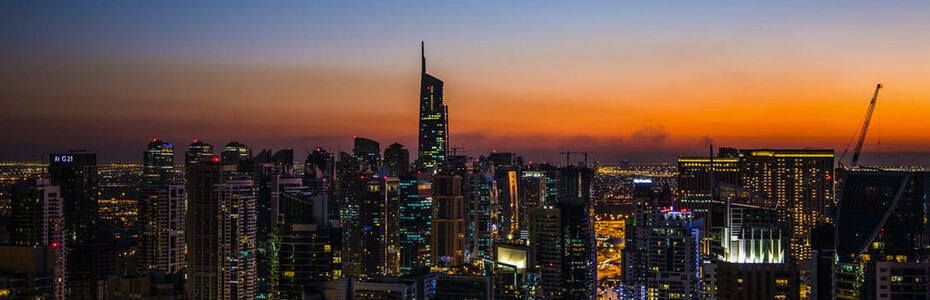
I am standing on a balcony in Dubai, and the air tastes like burnt rubber and expensive salt. Across the water, the Al Salmi is still smoldering. The Kuwaiti tanker, once a gleaming white-and-red titan of the seas, is now a blackened ribcage, courtesy of an Iranian drone that found its mark just before dawn. The smoke doesn't rise so much as it hangs, a heavy, greasy curtain over a city that used to pride itself on being the world’s most polished mirage. Today, April 1, 2026, the mirage has finally evaporated.
My coffee has gone cold, forming a thin, oily film that mimics the slick spreading across the harbor. On the television behind me, the news cycle is a frantic blur of red tickers. President Trump just finished a briefing where he leaned into the cameras and promised the world that the 2026 Iran War would be over in "two or three weeks." It’s a bold claim, the kind of timeline that sounds more like a real estate closing than a regional conflagration. But on the ground, the math doesn't add up.
The Black Smoke of Dubai: A Flashpoint in the 2026 Iran War
The tension here is tactile. You can feel it in the way the taxi drivers grip their steering wheels and the way the lights in the Burj Khalifa seem to flicker with a new, nervous energy. The Al Salmi attack wasn't just a strike on a ship; it was a puncture wound in the global jugular. With the 2026 Iran War effectively blockading the Strait of Hormuz, the world is holding its breath, watching the price of crude climb toward numbers that make the 2022 spikes look like a rounding error.
I spoke with a deckhand who made it off the tanker before the fire took hold. He was sitting on a plastic crate in the port, his hands shaking so violently he couldn't hold a cigarette. "It didn't make a sound," he told me, his eyes fixed on the horizon. "Just a shadow, then the world turned orange." He represents the human debris of this conflict—one of thousands of workers caught in the gears of a geopolitical machine they don't understand. While the diplomats in Vienna talk about "red lines," men like him are just trying to survive the next twenty-four hours.
The Energy Shockwave
- Global Markets: Brent crude is hovering near $180, a price point that is currently paralyzing logistics from Hamburg to Hanoi.
- Sovereign Response: In Seoul, the government has moved to a "Resource Security Crisis Alert," effectively banning private vehicle use on alternate days.
- The Russia Factor: As the West burns through its reserves, Moscow is watching its coffers swell, turning a brutal war into a financial lifeline for its own aging regime.
Negotiating with Bombs: The Brutal Logic of the 2026 Iran War
The rhetoric coming out of Washington is equally grim. Defense Secretary Pete Hegseth clarified the administration's stance this morning, noting that while talks with Tehran are "real," the U.S. intends to "negotiate with bombs" until a ceasefire is signed. It is a philosophy of hard power that has left central Iran in ruins. Just hours ago, U.S.-Israeli strikes hit massive steel complexes in the southwest, sending plumes of industrial grit into the atmosphere that will likely drift across the border by nightfall.
I watched the satellite feeds in a local newsroom. The precision is terrifying. You see a factory standing, and then, in a blink of thermal white, it is a crater. But for every steel mill leveled, the resolve in Tehran seems to harden. The 2026 Iran War has become a contest of who can bleed longer. The "three-week" promise feels less like a strategic certainty and more like a desperate attempt to keep the American electorate from revolting over five-dollar-a-gallon gas before the midterms.
Meanwhile, the shadows are lengthening. In Iraq, the kidnapping of journalist Shelly Kittleson has sent a chill through the press corps. The "safe zones" are shrinking. The infrastructure of the Middle East, built with decades of petrodollars, is being systematically dismantled. It isn't just about regime change anymore; it’s about the total erasure of a regional power’s ability to function.
The sun is setting now, turning the smoke from the Al Salmi a bruised purple. I look at the calendar on my phone. April 1st. In a different world, this would be a day for harmless deceptions and lighthearted pranks. But as the sirens begin to wail in the distance—a drill, I hope, but I’m never sure anymore—the only joke is the idea that this will all be over in twenty-one days. History isn't written in weeks; it’s written in the scars left on the people who couldn't get out in time. I'll stay on this balcony a little longer, watching the fire, waiting to see if the morning brings a miracle or just more smoke.
