







|
As the first quarter of 2026 draws to a close, the global community finds itself navigating a structural transition far more profound than the digital shifts of the early 2020s. We are witnessing the maturation of "Resilience Economics"—a paradigm where national security, energetic autonomy, and algorithmic sovereignty have superseded the low-cost, high-efficiency globalization of the previous thirty years. This report synthesizes the primary geopolitical, economic, and technological drivers that have defined the first ninety days of this pivotal year. I. The Geopolitical Fragmentation: Beyond the Bipolar MythThe defining feature of 2026 is not the anticipated clash between the United States and China, but rather the emergence of a "Multi-Nodal" world. The first quarter has demonstrated that middle powers—specifically the "MINT" and "BRICS+" expanded blocs—are no longer content to act as peripheral players in the digital and physical supply chains of the superpowers. We have entered an era of "Transactional Non-Alignment." In January 2026, the "New Delhi Accord" on digital infrastructure signaled a shift where India, Brazil, and Indonesia formally rejected the binary choice between American and Chinese tech stacks. By developing their own "Sovereign AI" frameworks, these nations have effectively created a third pole of influence. This is not merely a diplomatic preference; it is a hard-coded technical reality. As national firewalls become more sophisticated and data-residency laws more stringent, the global internet is fracturing into distinct "jurisdictional zones." The Council on Foreign Relations (CFR) recently noted that this "digital balkanization" is the primary risk to global trade fluidity in 2026, as companies must now navigate three or four distinct legal and technical architectures to operate globally. II. Energy Security: The Fusion Breakthrough and the Hydrogen PivotEnergy remains the central nervous system of global stability. The Q1 2026 energy landscape has been dominated by two factors: the stabilization of the Middle Eastern energy corridor following the 2025 "Cold Peace" agreements and the sudden acceleration of commercial nuclear fusion timelines. The March 2026 breakthrough in plasma diagnostic sensors—as covered in our recent technical brief—has shifted the narrative from "if" to "when." However, the immediate economic reality is defined by the "Green Wall." The EU’s Carbon Border Adjustment Mechanism (CBAM) entering its definitive phase today has forced a global revaluation of industrial assets. Nations that invested heavily in green hydrogen infrastructure during the 2023–2024 window are now reaping a "low-carbon premium." Conversely, heavy emitters in Eastern Europe and Central Asia are seeing their export margins collapse. The International Energy Agency (IEA) reports that for the first time, capital expenditure in renewable-to-grid storage has surpassed investment in traditional upstream gas, marking a permanent tilt in the global energy balance. The "Energy Transition" is no longer an environmental aspiration; it is a brutal economic filter determining which nations remain competitive in the Euro-Atlantic and Indo-Pacific markets. III. The Economic Paradigm: From Efficiency to "Buffer Capitalism"The IMF’s 2026 Spring Outlook paints a picture of "Constrained Growth." Global GDP is projected to grow at a modest 2.6%, a figure that reflects the cost of "near-shoring" and "friend-shoring." The 2026 economy has largely abandoned the "Just-in-Time" model in favor of "Just-in-Case" inventories. This shift, while inflationary in the short term, has provided a degree of systemic stability that was absent during the shocks of the early 2020s. We are also seeing the first real effects of the "AI Labor Realignment." Unlike the initial panic of 2023, 2026 has brought a nuanced understanding of AI’s role. The "Hype Cycle" has crashed, replaced by the "Utility Phase." White-collar productivity in sectors like law, middle-management, and data analysis has surged by 40%, but the "distribution problem" remains unsolved. Wealth inequality within G20 nations has reached a ten-year high, leading to renewed calls for "Universal Basic Services" rather than just income. The economic story of 2026 is one of incredible aggregate productivity gains shadowed by a growing crisis of social cohesion as the labor market struggles to re-skill at the pace of algorithmic deployment. IV. The Biological Frontier: The Genomic Standard of CarePerhaps the most significant, yet understated, achievement of 2026 is the mainstreaming of genomic medicine. The March 2026 FDA approval of the first broad-spectrum in-vivo CRISPR treatment for cardiovascular health marks the end of the "Statin Era" for the affluent. This is the beginning of what sociologists call the "Biological Divergence." In Q1, we saw the first widespread implementation of "Predictive Health Screening" integrated into national health systems in Singapore and Scandinavia. By using polygenic risk scores, these systems are now identifying and treating chronic diseases a decade before they manifest. The investigative challenge for the remainder of 2026 will be the "Bio-Security" implications. As DNA editing becomes a commodity, the risk of "black market genomics" has moved from science fiction to a primary concern for Interpol. The 2026 WHO summit in Geneva highlighted that the regulation of genetic data is now as critical as the regulation of nuclear material. V. Environmental Realism: The Age of AdaptationThe climate narrative in 2026 has shifted from "Mitigation" to "Forced Adaptation." The catastrophic monsoon season in Southeast Asia earlier this year and the unprecedented heat dome over the Mediterranean in February have ended the debate over the pace of warming. The Q1 focus has been on "Climate Finance" for physical infrastructure—sea walls, drought-resistant crop engineering, and urban cooling systems. The "Great Migration" is also becoming a measurable economic variable. For the first time, credit rating agencies are including "Climate Resilience" as a core component of sovereign debt ratings. Nations with high exposure to sea-level rise are seeing their borrowing costs spike, creating a "Climate Debt Trap" that the United Nations is currently struggling to address. The 2026 "Green New Deal" is no longer about solar panels; it is about the physical survival of coastal metropolises. Conclusion: The Horizon for Q2 and BeyondAs we look toward the remainder of 2026, the "Global Realignment" shows no signs of slowing. The winners of this quarter are those who have secured their supply chains, localized their intelligence, and decoupled their energy needs from volatile regions. The losers are those who remained tethered to the 20th-century model of global interdependence without safeguards. The world is not ending, but the world we knew in 2019 has been thoroughly dismantled and rebuilt into something more resilient, more fragmented, and considerably more complex. Sources: |

The Three-Week Promise: Inside the Gritty End-Game of the 2026 Iran War
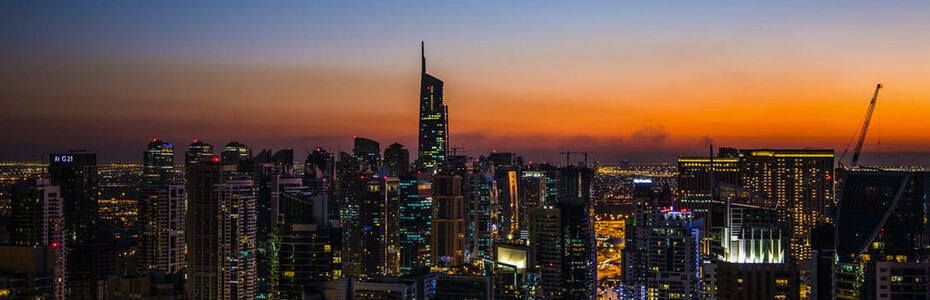
I am standing on a balcony in Dubai, and the air tastes like burnt rubber and expensive salt. Across the water, the Al Salmi is still smoldering. The Kuwaiti tanker, once a gleaming white-and-red titan of the seas, is now a blackened ribcage, courtesy of an Iranian drone that found its mark just before dawn. The smoke doesn't rise so much as it hangs, a heavy, greasy curtain over a city that used to pride itself on being the world’s most polished mirage. Today, April 1, 2026, the mirage has finally evaporated.
My coffee has gone cold, forming a thin, oily film that mimics the slick spreading across the harbor. On the television behind me, the news cycle is a frantic blur of red tickers. President Trump just finished a briefing where he leaned into the cameras and promised the world that the 2026 Iran War would be over in "two or three weeks." It’s a bold claim, the kind of timeline that sounds more like a real estate closing than a regional conflagration. But on the ground, the math doesn't add up.
The Black Smoke of Dubai: A Flashpoint in the 2026 Iran War
The tension here is tactile. You can feel it in the way the taxi drivers grip their steering wheels and the way the lights in the Burj Khalifa seem to flicker with a new, nervous energy. The Al Salmi attack wasn't just a strike on a ship; it was a puncture wound in the global jugular. With the 2026 Iran War effectively blockading the Strait of Hormuz, the world is holding its breath, watching the price of crude climb toward numbers that make the 2022 spikes look like a rounding error.
I spoke with a deckhand who made it off the tanker before the fire took hold. He was sitting on a plastic crate in the port, his hands shaking so violently he couldn't hold a cigarette. "It didn't make a sound," he told me, his eyes fixed on the horizon. "Just a shadow, then the world turned orange." He represents the human debris of this conflict—one of thousands of workers caught in the gears of a geopolitical machine they don't understand. While the diplomats in Vienna talk about "red lines," men like him are just trying to survive the next twenty-four hours.
The Energy Shockwave
- Global Markets: Brent crude is hovering near $180, a price point that is currently paralyzing logistics from Hamburg to Hanoi.
- Sovereign Response: In Seoul, the government has moved to a "Resource Security Crisis Alert," effectively banning private vehicle use on alternate days.
- The Russia Factor: As the West burns through its reserves, Moscow is watching its coffers swell, turning a brutal war into a financial lifeline for its own aging regime.
Negotiating with Bombs: The Brutal Logic of the 2026 Iran War
The rhetoric coming out of Washington is equally grim. Defense Secretary Pete Hegseth clarified the administration's stance this morning, noting that while talks with Tehran are "real," the U.S. intends to "negotiate with bombs" until a ceasefire is signed. It is a philosophy of hard power that has left central Iran in ruins. Just hours ago, U.S.-Israeli strikes hit massive steel complexes in the southwest, sending plumes of industrial grit into the atmosphere that will likely drift across the border by nightfall.
I watched the satellite feeds in a local newsroom. The precision is terrifying. You see a factory standing, and then, in a blink of thermal white, it is a crater. But for every steel mill leveled, the resolve in Tehran seems to harden. The 2026 Iran War has become a contest of who can bleed longer. The "three-week" promise feels less like a strategic certainty and more like a desperate attempt to keep the American electorate from revolting over five-dollar-a-gallon gas before the midterms.
Meanwhile, the shadows are lengthening. In Iraq, the kidnapping of journalist Shelly Kittleson has sent a chill through the press corps. The "safe zones" are shrinking. The infrastructure of the Middle East, built with decades of petrodollars, is being systematically dismantled. It isn't just about regime change anymore; it’s about the total erasure of a regional power’s ability to function.
The sun is setting now, turning the smoke from the Al Salmi a bruised purple. I look at the calendar on my phone. April 1st. In a different world, this would be a day for harmless deceptions and lighthearted pranks. But as the sirens begin to wail in the distance—a drill, I hope, but I’m never sure anymore—the only joke is the idea that this will all be over in twenty-one days. History isn't written in weeks; it’s written in the scars left on the people who couldn't get out in time. I'll stay on this balcony a little longer, watching the fire, waiting to see if the morning brings a miracle or just more smoke.

